

My love of turtles really started during the few years I lived at a particular apartment complex. I got to know the turtles living in those man-made ponds, and I’d take them veggies or leftover meat to feed and interact with them. Eventually, I got into turtles so much so that I’ve ended up adopting three of them. Two of them have been with me for close to 15 years.
In the process of learning and keeping these turtles, I’ve learned about many other kinds that exist all over the world. Some of those that live on the North American continent are incredibly beautiful, and have inspired some of my artwork.

Many turtles hatch with vibrant colors that camouflage them when young to deter predators, and the colors change overtime as they mature. Patterns on their shells can be as unique as fingerprints are to a human, and the color variation alone is often impressive.
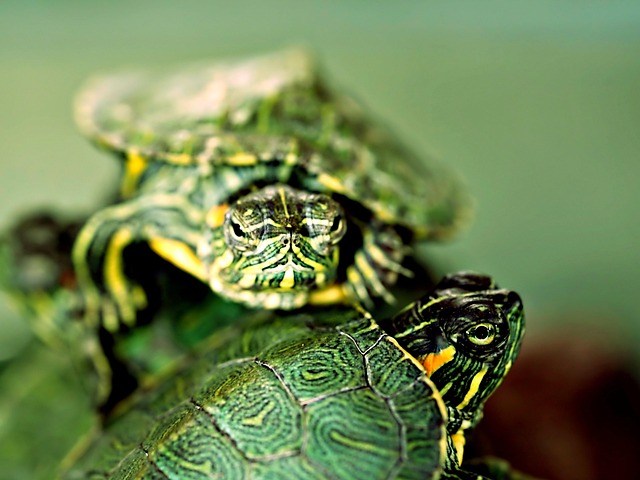
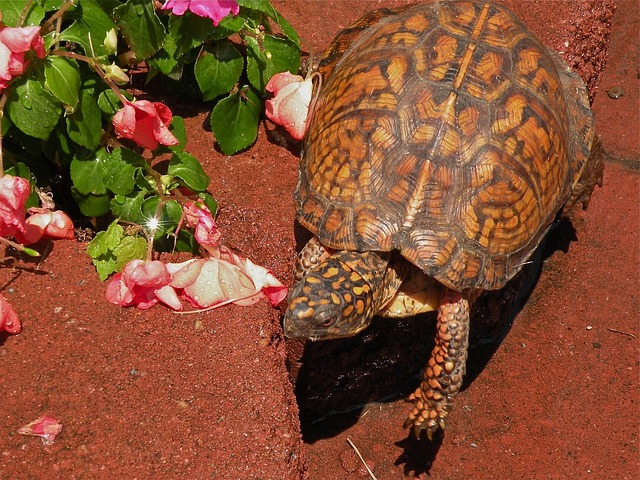
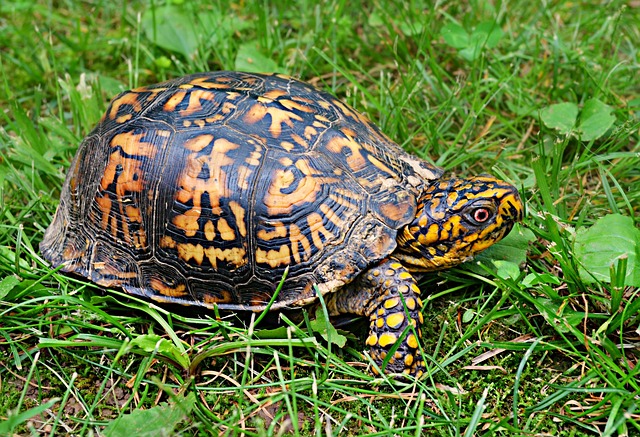
Eastern Box Turtle
One of the most common and iconic box turtles in the United States, this turtle can have both subtle hues or splendid, vibrant markings. Their eyes range from brown to blood red. Like all box turtles, they possess a hinged plastron which allows them to fully close up the head and legs inside their shell. They are also usually found near water, and can actually swim if they need to. Sadly, many lose their lives crossing roads. If you spot any turtle crossing a road, just try to move them to the other side in the direction they were headed.
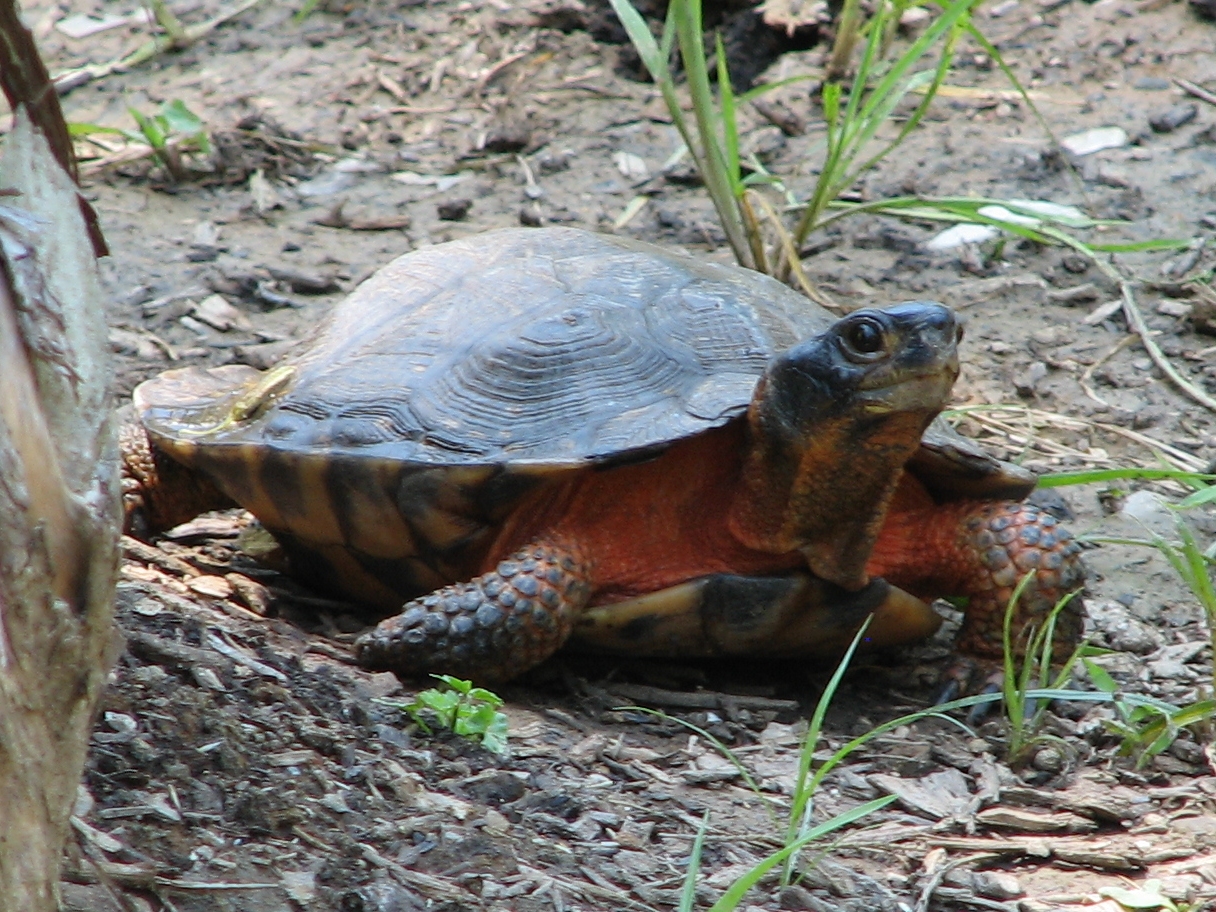
Wood Turtle
This is another iconic species known for their semi-aquatic behavior and intelligence. Known for performing a “rain dance” to entice earthworms to the surface of the ground so they can eat them, Wood Turtles have a few tricks up their sleeves. They sport bright orange on the skin on their legs and throat, while their shells vary between tan to brown with black or yellow lines on each scute. This species is also sadly in decline.
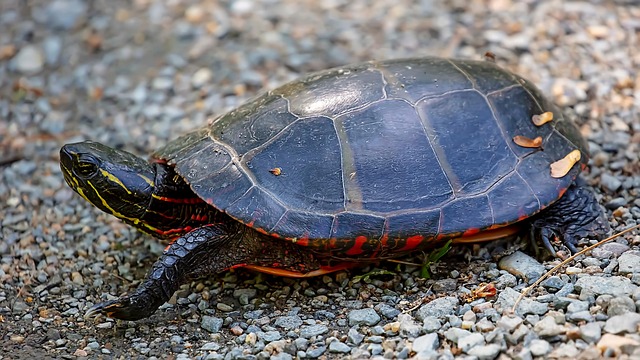
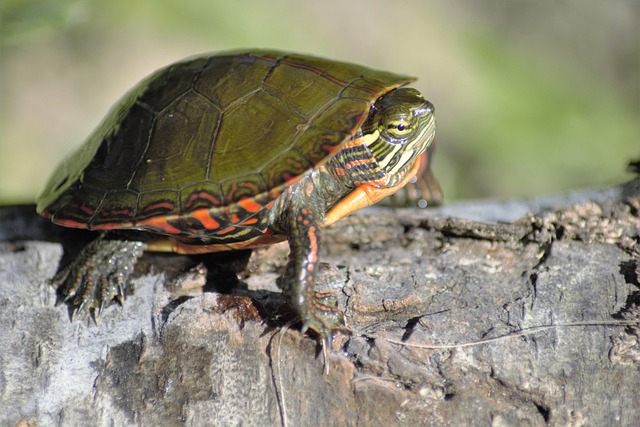
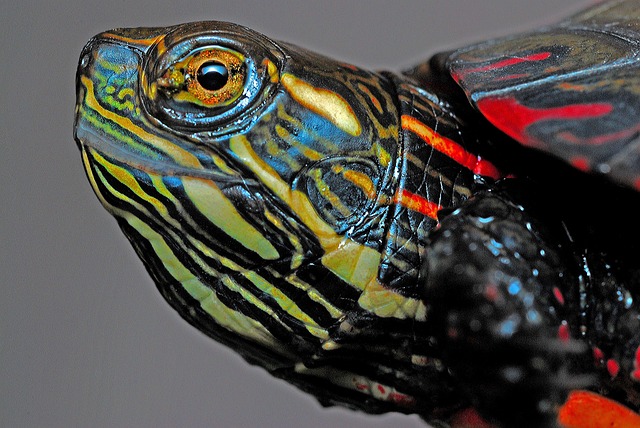
Painted Turtles
A family of aquatic turtles with many colors, patterns, and sizes. With olive shells, these turtles have red and yellow stripes on their head and legs. Some even have beautiful patterns on their plastrons, such as the Western Painted. They were once called sun turtles for their basking habits, though most aquatic turtles could be called by that name.
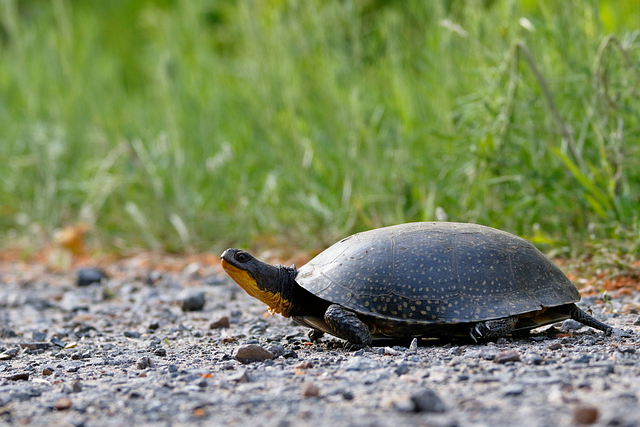
Blanding’s Turtle
Never without a smile, the Blanding’s is a large pond turtle found in Canada and the Eastern U.S.. They generally show no common signs of aging, and can be reproductive at ages of 80-90 years. Their bright yellow chin and throat contrasts with the darker dorsal areas. Their shells are dark with speckles all over. They are endangered in most of their range, and are semi-aquatic. They tend to live in wetlands with clean shallow water, and are fairly timid if approached. Habitat fragmentation is the largest threat to the survival of this species.
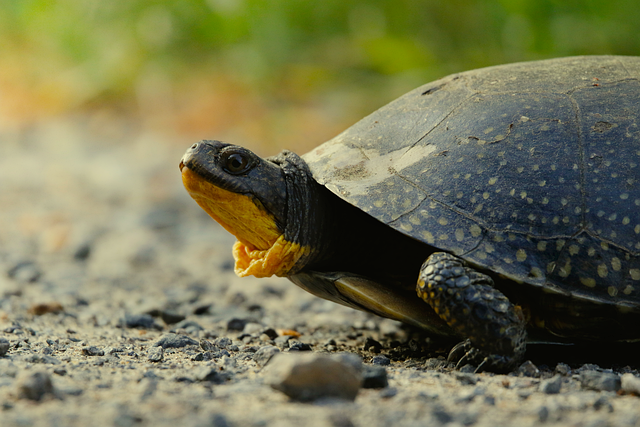
Hawksbill Seaturtle
Growing to an average of one meter, the Hawksbill has a distinctive shell with serrated marginal scutes, and a hooked beak that earned their species name. The shell has an amber color with starburst pattern on each scute. Each of the front flippers has two visible claws. Due to their diet consisting of jellyfish, the turtles’ flesh is toxic. They are also the first reptile to be documented for bioflourescence, due to ingestion of hard corals that contain microorganisms that produce their own light.
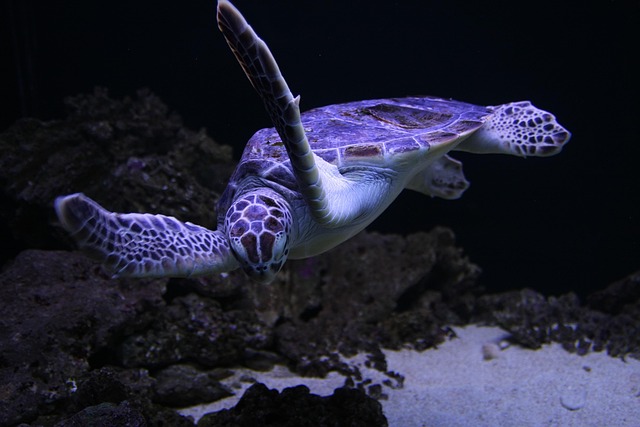

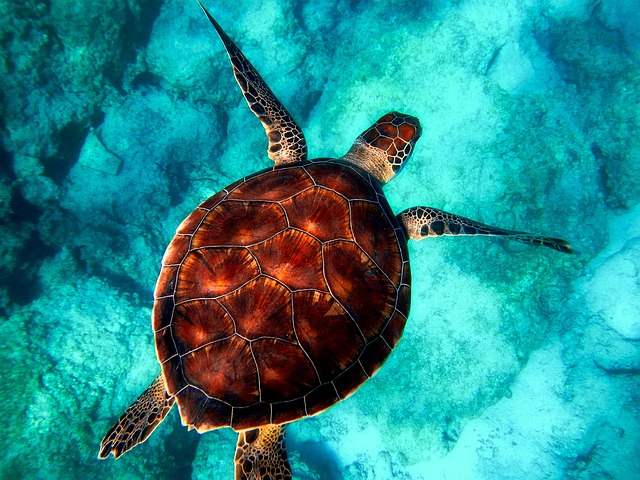
These are just a few turtles that struck me as beautiful and so many more are worth mentioning. I’m going to make this a type of series where I highlight certain animals for their appearance or behavior, and how they inspire me. So many of these creatures live right under our noses and we forget to take notice. I want to share what I see with others, so this will be my part in doing just that. See you next post.
 Art of Angela DeRiso
Leave a comment